
 Image 1 of 1
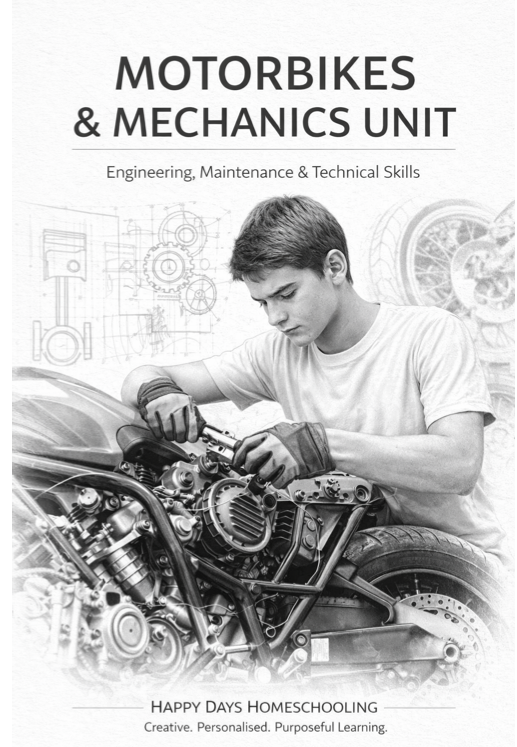
Advanced Motorbikes, Diesel and Business Unit is a practical, real-world learning program that combines mechanics, workshop thinking, business development, history, geography, literacy and presentation skills. Students explore how bikes, engines, tools and mechanical systems work while also learning how these skills can connect to future work, customer service and small business planning.
Throughout the unit, students complete hands-on and research-based tasks such as analysing a bike system, comparing petrol, diesel and electric engines, documenting workshop tools, creating a diagnostic checklist, planning a build or modification project, designing a mechanic business, preparing customer job sheets, developing marketing materials and calculating profit. The unit also includes history and geography links, helping students understand how motorbikes have changed over time and how different places shape the way bikes are built, used and valued.
By the end of the unit, students create a professional portfolio that may include presentations, photos, diagrams, tool guides, diagnostic notes, process pages, a business plan, branding materials, quotes, financial calculations and a final reflection. This unit is designed to feel purposeful and practical, giving students strong evidence of technical thinking, communication, problem-solving, enterprise learning and real-world skill development.
Advanced Motorbikes, Diesel and Business Unit is a practical, real-world learning program that combines mechanics, workshop thinking, business development, history, geography, literacy and presentation skills. Students explore how bikes, engines, tools and mechanical systems work while also learning how these skills can connect to future work, customer service and small business planning.
Throughout the unit, students complete hands-on and research-based tasks such as analysing a bike system, comparing petrol, diesel and electric engines, documenting workshop tools, creating a diagnostic checklist, planning a build or modification project, designing a mechanic business, preparing customer job sheets, developing marketing materials and calculating profit. The unit also includes history and geography links, helping students understand how motorbikes have changed over time and how different places shape the way bikes are built, used and valued.
By the end of the unit, students create a professional portfolio that may include presentations, photos, diagrams, tool guides, diagnostic notes, process pages, a business plan, branding materials, quotes, financial calculations and a final reflection. This unit is designed to feel purposeful and practical, giving students strong evidence of technical thinking, communication, problem-solving, enterprise learning and real-world skill development.